
A good office chair is one of the few pieces of furniture you use for thousands of hours a year, and it is easy to buy the wrong one. The showroom test, sitting for thirty seconds and saying it feels nice, tells you almost nothing about how your back will feel at four in the afternoon. A better approach is to check a handful of things that ergonomics guidance keeps coming back to.
1. Seat height that fits you
Your feet should rest flat on the floor, or on a footrest, with your thighs roughly level and your knees at about the height of your hips. Almost every task chair has a gas cylinder for height, but the range varies. Shorter and taller people should check the minimum and maximum in the specifications before buying. We go deeper on this in how to get the right chair height.
2. Seat depth
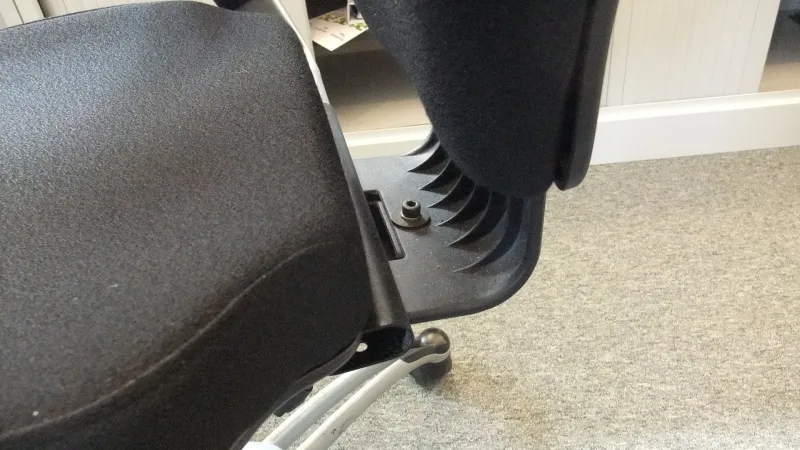
When you sit all the way back, there should be a gap of roughly two to four fingers between the front edge of the seat and the backs of your knees. Too deep and you will perch on the front edge, losing the backrest. Many better chairs have a sliding seat pan for this reason.
3. Lumbar support you can adjust
The backrest should support the inward curve of your lower back. Look for lumbar support that moves up and down, or in and out, rather than a fixed bump that may land in the wrong place for your body.
4. A backrest that reclines and locks
Sitting bolt upright all day is not the goal. A slight recline takes load off the spine. A good chair lets you lean back with adjustable tension and lock the angle you like.
5. Armrests that adjust, or come off
Armrests should let your shoulders relax with elbows near your sides. If they are too high, your shoulders creep up. If they are fixed and too wide, or they bump the desk, they get in the way. Height-adjustable or removable arms are worth paying for.
6. Materials that suit your room
Mesh backs breathe better in warm offices, while foam and fabric feel softer and warmer. See our look at mesh back chairs. If a chair will be used around the clock, as at a security desk or nurses’ station, buy one rated for it; see 24-hour chairs versus regular chairs.
7. A warranty and a return policy
A serious chair maker will back the cylinder, mechanism and frame for years. Buying online is fine if you can return a chair that does not fit, because fit is personal. Used office furniture dealers are also a good way to get a high-end chair for a fraction of the new price.
No chair fixes a bad setup on its own. Put the monitor at about eye level, keep the keyboard close, and get up and move every so often. The best chair is the one that lets you forget about it.
Sources: Computer Workstations eTool: Chairs, U.S. Occupational Safety and Health Administration; “Office ergonomics: Your how-to guide,” Mayo Clinic.