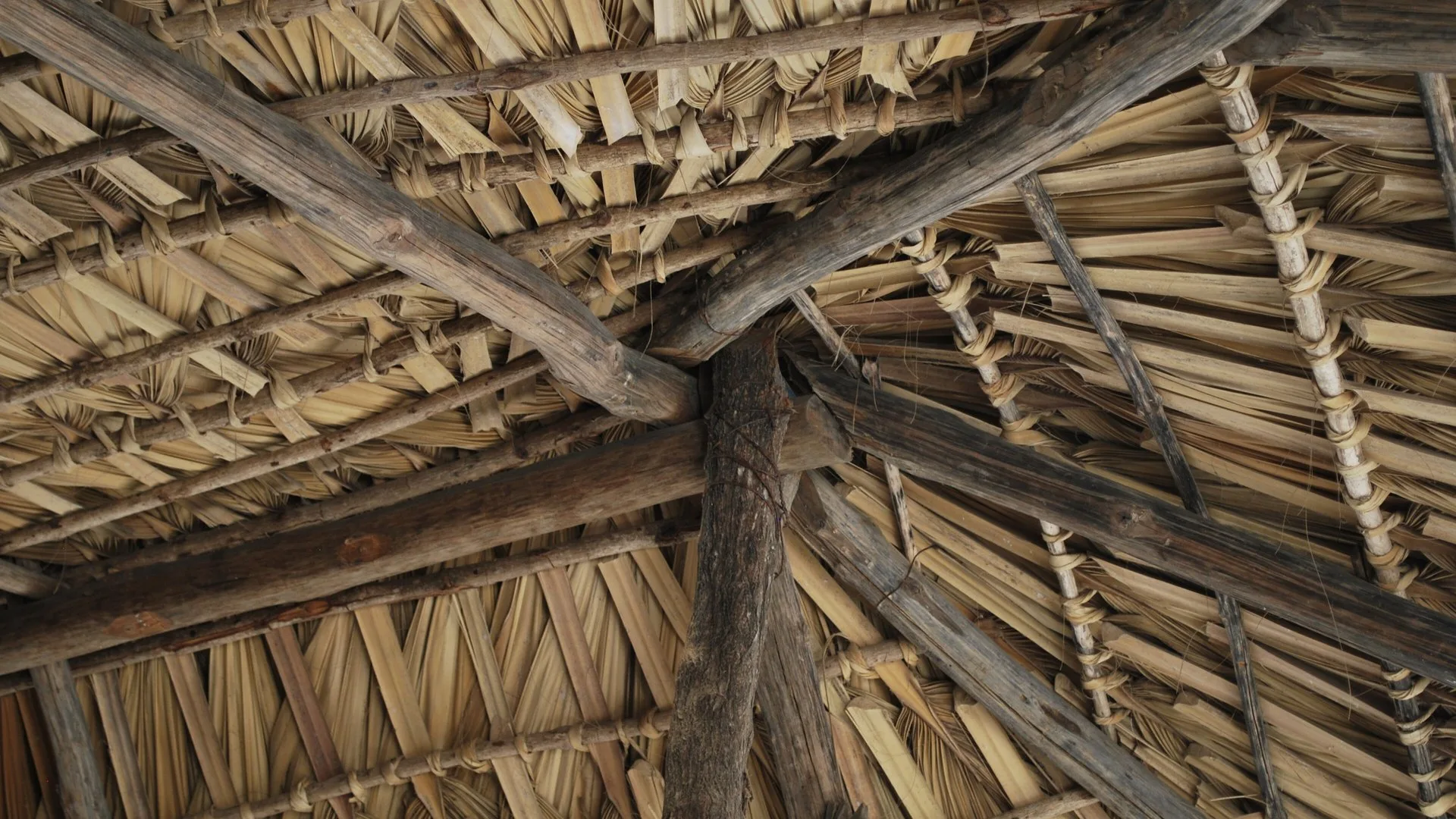
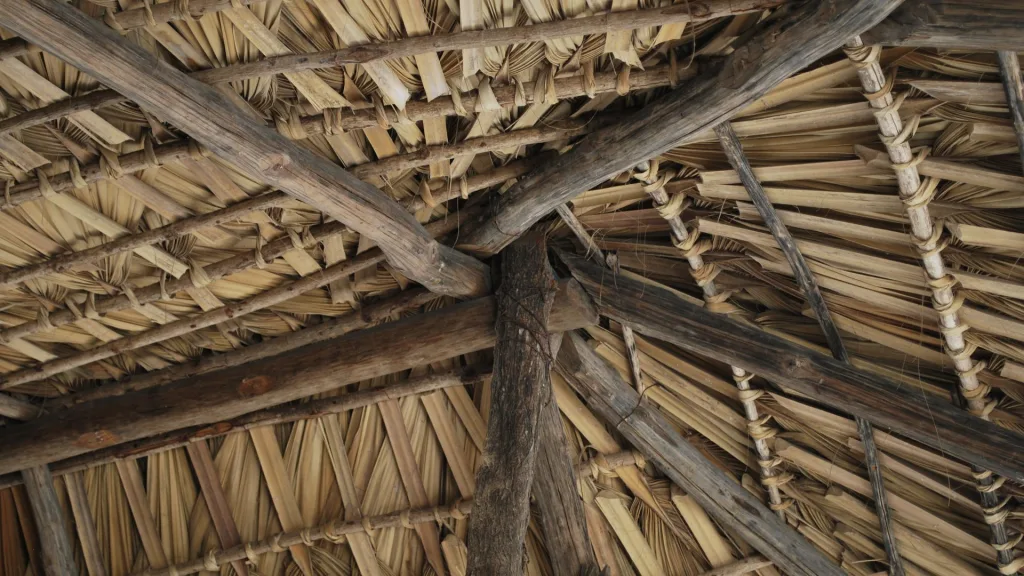
If you have eaten fish tacos on a beach in Baja California, you have probably sat under a palapa. The word comes from Spanish, where it names both a type of palm and the open-sided shelter roofed with its dried fronds. Along Mexico’s Pacific and Gulf coasts the palapa is everywhere: over beach tables, outdoor kitchens, boat docks and whole restaurants.
Palapa, tiki hut or thatch umbrella?
The three get mixed up, and the lines are blurry, but there are some useful rules of thumb.
- A palapa is a permanent roof on posts, open on the sides. Small ones stand on a single central pole; larger ones use two poles or a ring of posts and a timber frame.
- A tiki hut, in the American sense, usually has thatched walls or partial walls, with its support around the edges. It is more of a room than a roof.
- A thatch umbrella is a movable patio umbrella dressed in palm or synthetic thatch. It may fold, and it sits in a base rather than being set into the ground.
Why the thatch is the point
A good palapa roof is thick and steeply pitched. Rain runs off the layered fronds instead of soaking through, and hot air escapes up through the thatch, so the shade underneath feels noticeably cooler than under a solid roof. The fronds rattle in a breeze. People who grew up with palapas will tell you the sound is half the appeal.
Palapas north of the border
In the United States palapas spread through the Sun Belt, especially Southern California, Arizona, Texas and Florida, on patios, pool decks and Baja-style restaurants. Builders offer everything from small kit palapas to large custom structures, and prices run from the hundreds into many thousands of dollars depending on size and materials. Cities and counties increasingly treat larger palapas as structures that need permits and fire review, so check before building one.
Other thatches
Not every palapa uses palm. Some builders use African reed thatch, which is stiff and looks almost like thin bamboo, or makuti, panels of woven coconut palm leaves common on the East African coast. Reed can turn brittle in very dry, sunny climates, while palm and makuti hold up better in salt air. Synthetic thatch, made from plastic or aluminum that mimics the look, has become popular where fire codes or maintenance are a worry.
Keeping one up
Natural thatch is a plant product, and it wears out. Sun, wind and birds all take a toll, and most palapa roofs need patching every few years and a full rethatch eventually. The good news is that the frame usually outlives the thatch, and worn sections can be stripped and replaced without rebuilding the structure.
Sources: Palapa, Wikipedia; Thatching, Wikipedia; “palapa,” Diccionario de la lengua española, Real Academia Española.