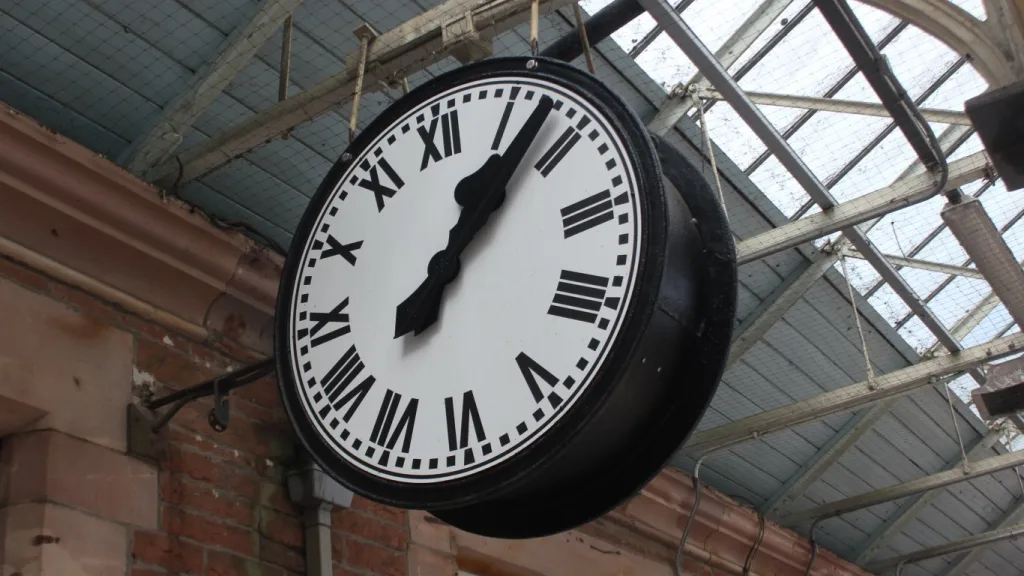
Until the 1880s, there was no single time in the United States. Each town kept its own “local mean time,” set so that noon was when the sun was highest. When it was noon in Chicago, it was about 12:30 in Pittsburgh. For most of history, that hardly mattered. Then came the railroads.
Chaos on the timetable
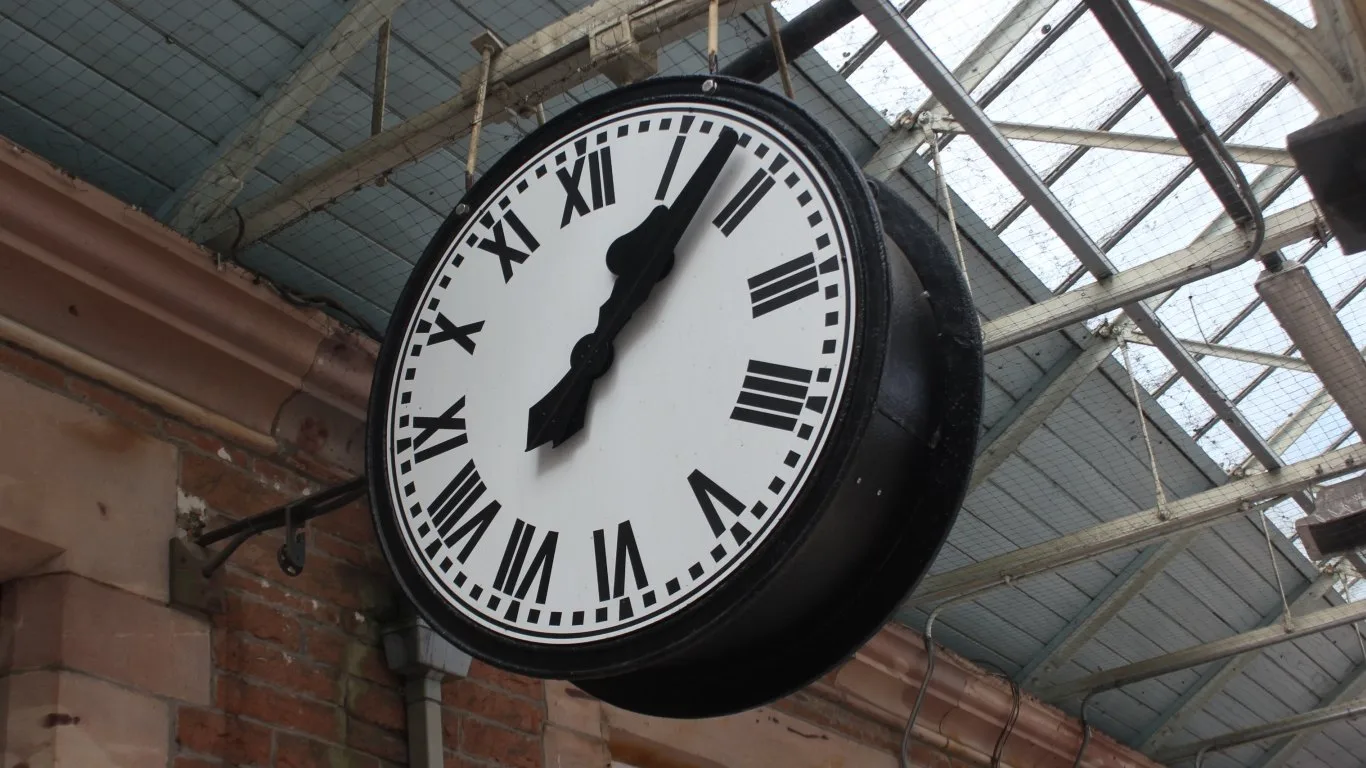
Railroads kept their own times, usually based on their headquarters city, and a big station might display several clocks for different lines. Travelers had to convert between dozens of local times, and the confusion contributed to scheduling errors and dangerous mistakes on single-track lines, where trains running toward each other depended on accurate timing.
The day of two noons
The railroads solved it themselves. At a meeting in 1883, they agreed to a system of standard time zones, based on proposals by scholars including William F. Allen, a railroad official. On November 18, 1883, sometimes called “the day of two noons,” railroads across the U.S. and Canada reset their clocks. In many eastern cities, clocks struck noon by local time and then were reset to noon again by the new standard time. Most towns adopted railroad time quickly, though some resisted.
Making it official
The next year, the International Meridian Conference in Washington chose Greenwich, England, as the prime meridian, the basis for the world’s time zones. In the U.S., the zones stayed a private railroad arrangement until the Standard Time Act of 1918, which also introduced daylight saving time during World War I. Today the U.S. Department of Transportation oversees time zone boundaries, a legacy of their railroad origins.
So the next time your phone switches time zones on its own as you travel, remember that the whole system was invented to keep trains from crashing into each other.
Sources: Today in History: November 18, Library of Congress; Standard time, Wikipedia.