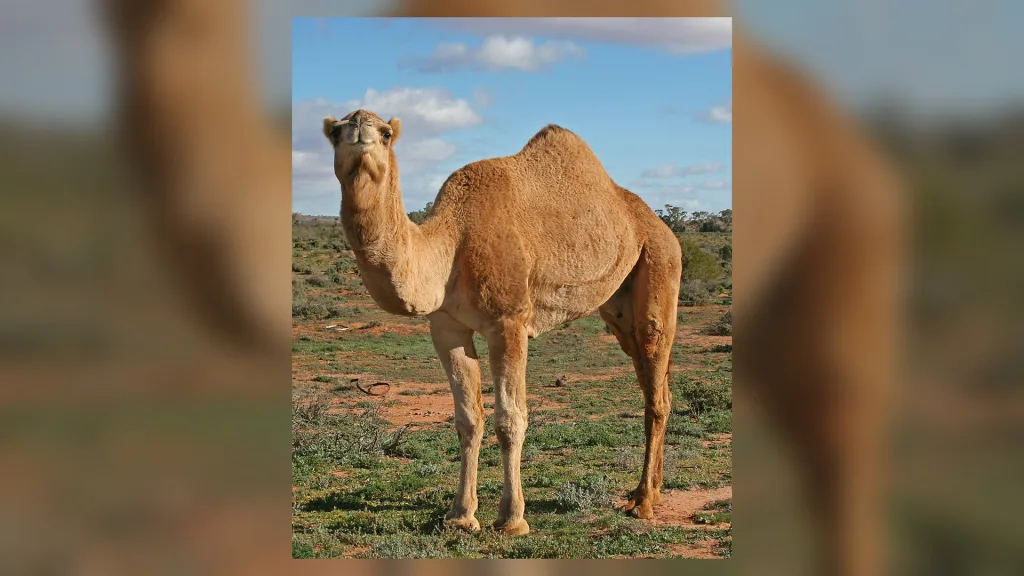
Ask a room full of adults what is inside a camel’s hump and most of them will say water. It is one of those facts that feels too tidy to be wrong, which is usually a sign that it is.
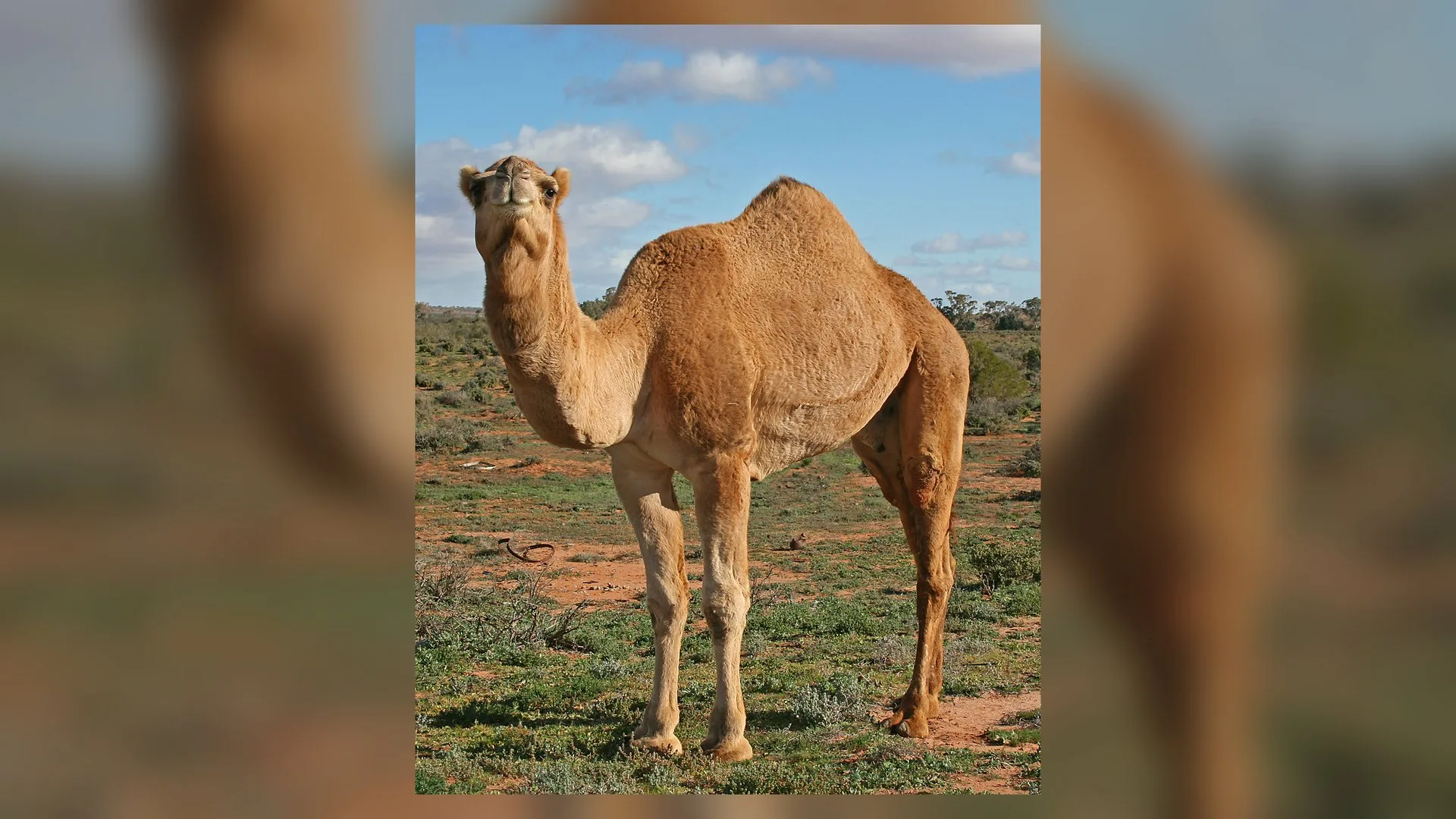
The hump is fat. A healthy dromedary can carry somewhere around 30 to 35 kilograms of it, roughly 80 pounds, piled up on its back instead of spread under the skin the way most mammals store it. That placement is the clever part. Fat is good insulation, and a coat of it all over the body would trap heat in a desert animal that badly needs to shed it. Stacking the reserve in one place lets the rest of the body stay lean and cool.
So where does the water go?
Into the camel, all of it, and fast. A thirsty camel can drink more than 100 liters in about ten minutes, a volume that would kill most animals by diluting their blood. Camels get away with it partly because of their red blood cells, which are oval rather than round and can swell a long way without bursting.
The bigger trick is how slowly they lose water to begin with. In the 1950s the physiologist Knut Schmidt-Nielsen and his colleagues spent long stretches in the Sahara measuring camels, and what they found reads like a list of small, stubborn economies:
- A floating body temperature. A dehydrated camel lets its temperature drift by as much as six degrees Celsius over a day, from around 34°C at dawn to above 40°C in the afternoon. Instead of sweating to stay cool, it soaks up heat during the day and gets rid of it in the cold night air.
- A nose that recycles. The nasal passages cool exhaled air and pull moisture back out of it before it leaves the body.
- Kidneys and gut that waste almost nothing. Camels produce concentrated urine and dung dry enough to burn.
- Tolerance for losing a lot. A camel can lose about a quarter of its body weight in water and keep walking. For most mammals, losing around 15 percent is fatal.
The fat-into-water argument
There is a more sophisticated version of the myth: the hump does not hold water, but burning the fat makes water, so it is a water tank after all. Chemically, burning a gram of fat does yield a bit more than a gram of water. The catch, which Schmidt-Nielsen pointed out, is that burning fat takes oxygen, and breathing harder to get that oxygen loses water through the lungs. In hot, dry air the books come close to balancing. The hump is an energy store first, and its real value is that it lets a camel go a long time without food as well as without water.
When the reserve runs down, you can see it. The hump shrinks and goes soft, and on Bactrian camels the two humps may flop over to one side. Feed and water the animal properly for a few weeks and they stand back up.
Why the myth hangs on
It is a good story, and it explains something real in a way a child can picture: the camel crosses the desert without drinking, so it must be carrying water somewhere. The truth is less portable. A camel is not a canteen on legs. It is an animal whose whole body, from blood cells to nostrils, is built to spend water slowly and take it back quickly.
For the rest of the camel myths, from the spitting to the “tipped” humps, see Dispelling Myths About Camels. And if you are still not sure which camel is which, start with one hump versus two.
Sources: Knut Schmidt-Nielsen, “The Physiology of the Camel,” Scientific American (December 1959); Dromedary, Wikipedia; Camel, Encyclopaedia Britannica.