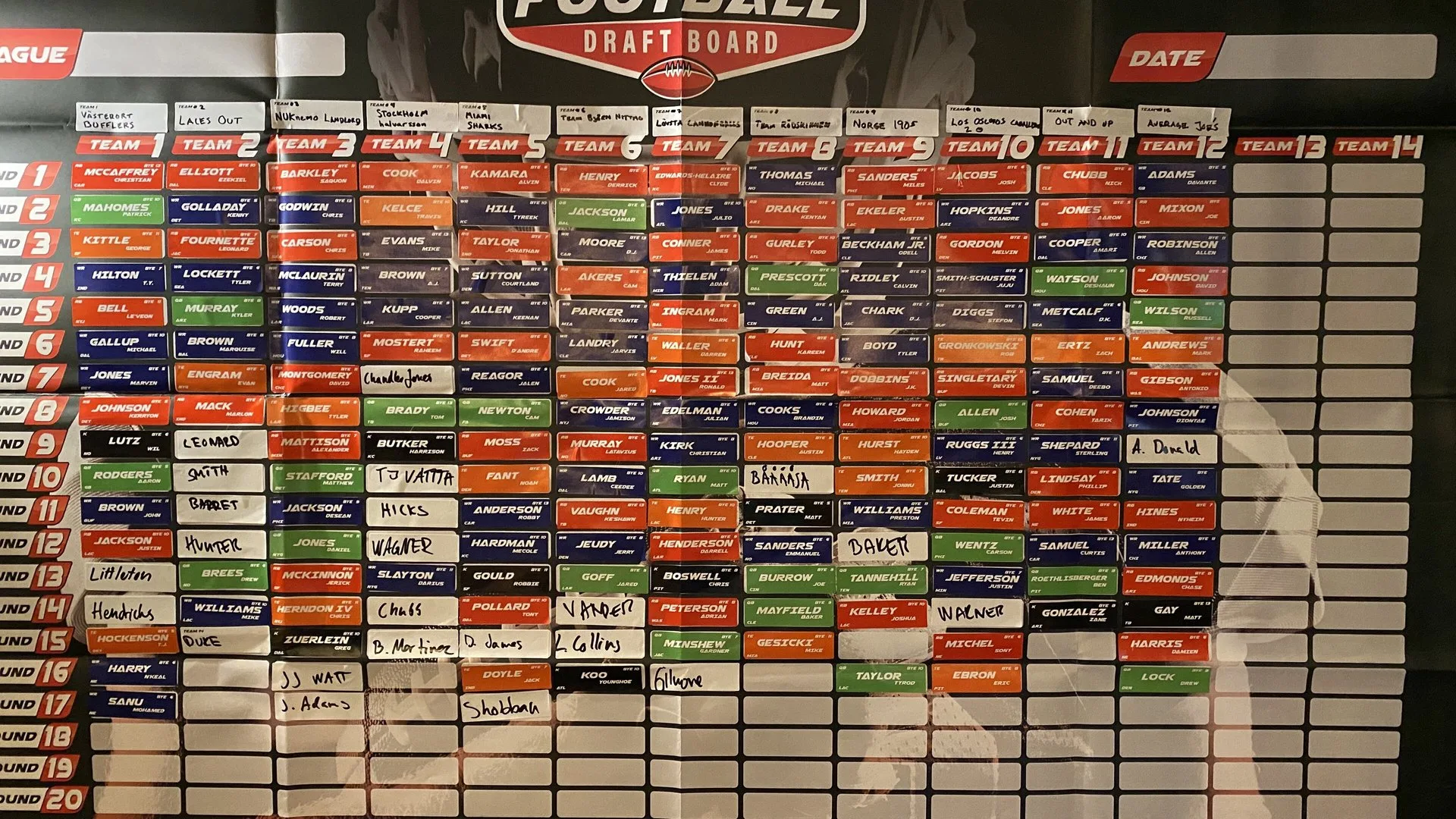
Two of the biggest entertainment trends of the past quarter-century have names that sound like they are swapped. Television, traditionally the home of fiction, gave us reality TV. Sports, where results are as real as it gets, gave us fantasy leagues.
Fantasy, built on real numbers
Fantasy sports have deeper roots than most people think. A group in Oakland is credited with organizing a fantasy football league in the early 1960s. The modern form took off with Rotisserie League Baseball, invented in 1980 by the writer Daniel Okrent and friends, named after the New York restaurant where they met. Players draft real athletes and score points based on their actual statistics.
The internet turned a hobby for stat-obsessed fans into a mass market. The Fantasy Sports & Gaming Association estimates that tens of millions of people in the U.S. and Canada play. The fantasy is not about inventing results. It is about owning a slice of them.
Reality, shaped by producers
Reality TV also has a long history, from Candid Camera to PBS’s 1973 documentary series An American Family and MTV’s The Real World in 1992. The genre exploded in 2000 with Survivor and then American Idol in 2002. Its “reality” is real people in contrived situations, edited by producers into storylines with heroes and villains.
The common thread
What the two share is participation. Fantasy players do not just watch a game; they have a stake in it. Shows like American Idol let viewers vote and decide who stays. Both turned audiences into players and gave them reasons to care about every moment, not just the final score.
That idea has only grown. Sports betting, legalized in many U.S. states after a 2018 Supreme Court ruling, takes the fantasy stake and adds money. Social media lets every viewer comment on the reality show in real time. Entertainment is no longer something you watch from the couch. It is something you play.
Sources: Rotisserie League Baseball, Wikipedia; Industry Demographics, Fantasy Sports & Gaming Association; Reality television, Wikipedia; Murphy v. NCAA, Wikipedia.