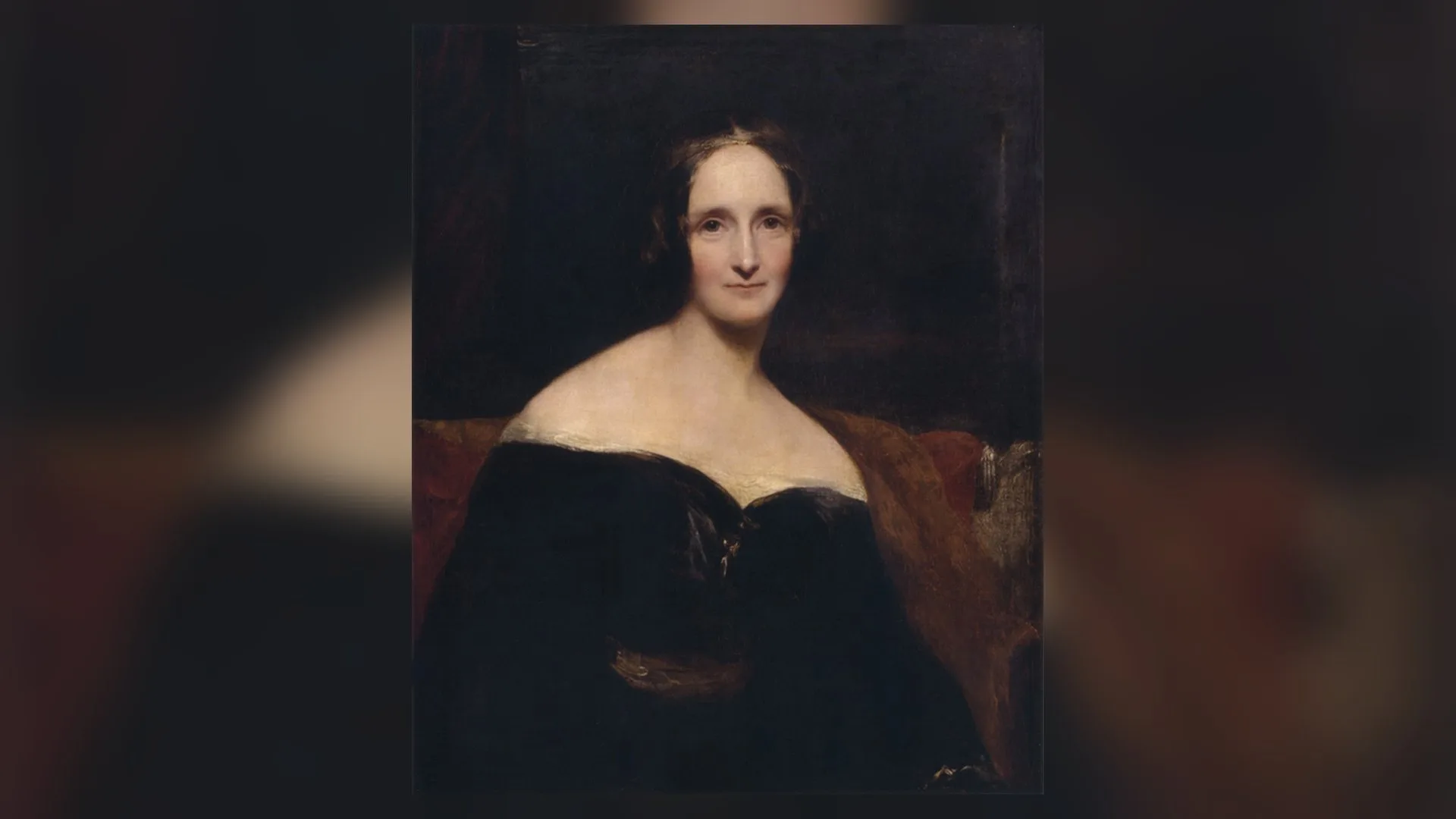
In the summer of 1816, a group of young English writers gathered at the Villa Diodati on Lake Geneva, rented by the poet Lord Byron. With them were Percy Bysshe Shelley, his partner Mary Wollstonecraft Godwin (soon to be Mary Shelley), her stepsister Claire Clairmont and Byron’s doctor, John Polidori. It was a famously bad summer: 1816 became known as “the year without a summer,” after a massive volcanic eruption the year before, Mount Tambora in Indonesia, cooled the climate around the world.
The contest
Stuck indoors by storms, the group read German ghost stories, and Byron proposed that each of them write one. Mary, who was 18, struggled for days. Then, she later wrote, an idea came to her in a waking dream: a “pale student of unhallowed arts” kneeling beside a thing he had put together, watching it stir to life.
That vision became Frankenstein; or, The Modern Prometheus. What started as a short tale grew into a novel, published anonymously in London in January 1818, when Mary was 20. Polidori’s contribution from the same summer, The Vampyre, became the first modern vampire story in English.
More than a monster story
The novel is often remembered through film: the flat-headed, bolted-neck creature of Universal’s 1931 movie. The book is very different. Its creature is articulate, sensitive and abandoned by the scientist who made him, and turns violent only after being rejected by everyone he meets. The novel asks questions that still feel current: what a creator owes to what he creates, and what happens when ambition outruns responsibility.
The first science fiction novel?
Many critics, including the writer Brian Aldiss, have called Frankenstein the first true science fiction novel, because its horror comes not from the supernatural but from science. Mary Shelley drew on real experiments of her time, including attempts to make dead animals twitch with electricity.
More than two centuries later, every debate about artificial intelligence or genetic engineering seems to reach for the same word: Frankenstein. Not bad for a teenager’s entry in a ghost story contest.
Sources: Frankenstein, Wikipedia; Frankenstein by Mary Wollstonecraft Shelley, Project Gutenberg; Year Without a Summer, Wikipedia.