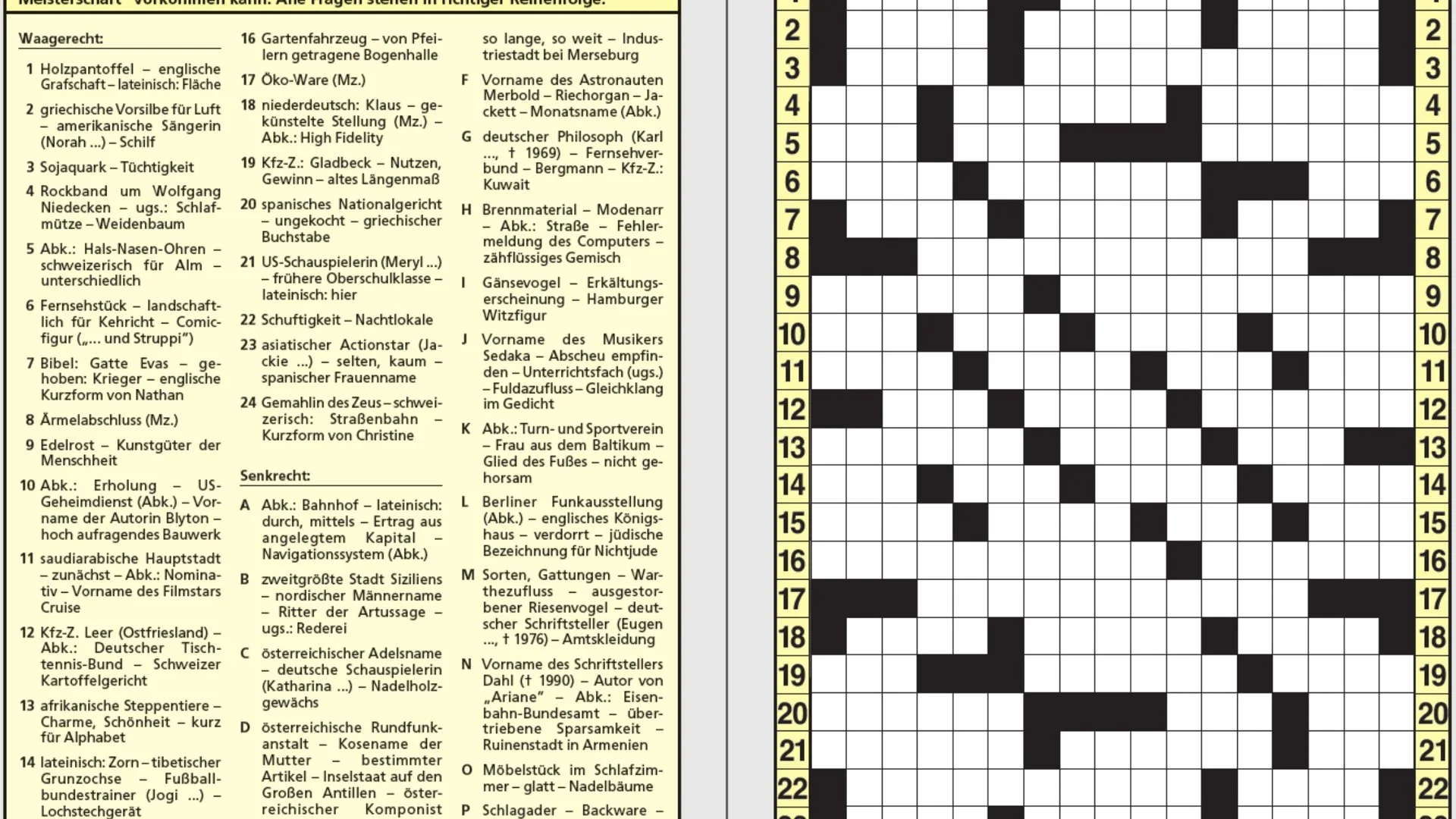
On December 21, 1913, the New York World published a puzzle in its Sunday “Fun” supplement that it called a “word-cross.” Its creator, Arthur Wynne, a journalist born in Liverpool, had arranged words in a diamond-shaped grid with numbered clues. Within weeks, the name was flipped to “cross-word,” and the hyphen eventually disappeared.
A craze, and a backlash
For about a decade, the World was the main place to find crosswords. Then, in 1924, a new publishing company run by Richard Simon and Max Schuster released a book of crossword puzzles, with a pencil attached. It was a huge hit and helped launch Simon & Schuster. Crosswords became a national craze, with dictionaries flying off shelves and puzzle-solving on commuter trains.
Not everyone approved. The New York Times grumbled in 1924 that crossword puzzles were a “sinful waste” of time and a passing fad. The paper did not publish its own crossword until 1942, when its editors argued that during World War II readers needed something to occupy their minds during blackouts.
The puzzle grows up
Under its first puzzle editor, Margaret Farrar, the Times crossword set rules that most American puzzles still follow: symmetrical grids, every letter part of two words and a limit on black squares. Later editors, including Will Shortz, who took over in 1993, made the puzzle wittier and more playful, with themes, wordplay and clues that changed in difficulty through the week, Monday easiest and Saturday hardest.
Why it lasts
Crosswords have survived radio, television and the internet, and have thrived in apps, where millions solve daily. A newer generation of constructors has pushed for fresher vocabulary and more diverse references. The basic pleasure is unchanged since 1913: a blank grid, a pencil and the small, satisfying click of a word falling into place.
Sources: Arthur Wynne, Wikipedia; The New York Times crossword, Wikipedia; Crossword, Wikipedia.