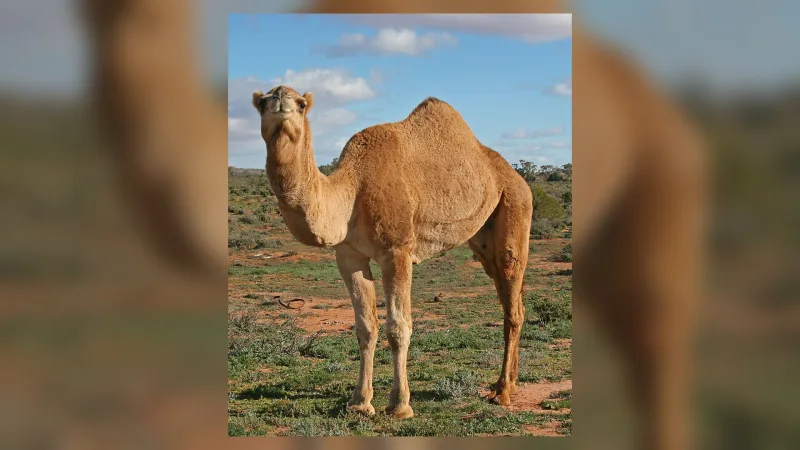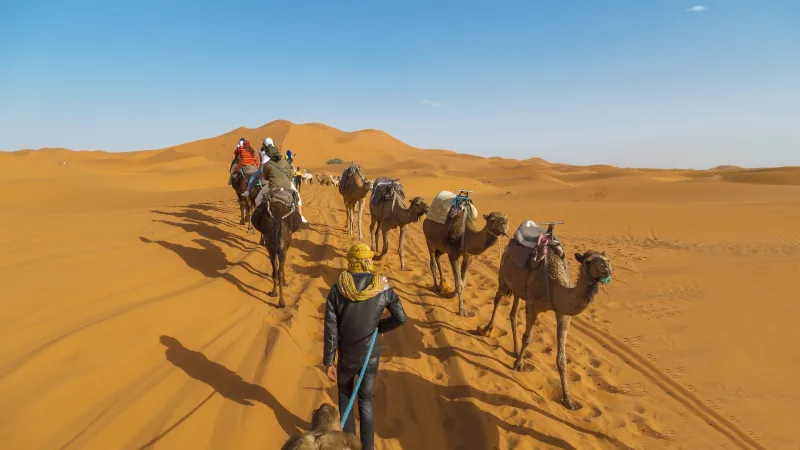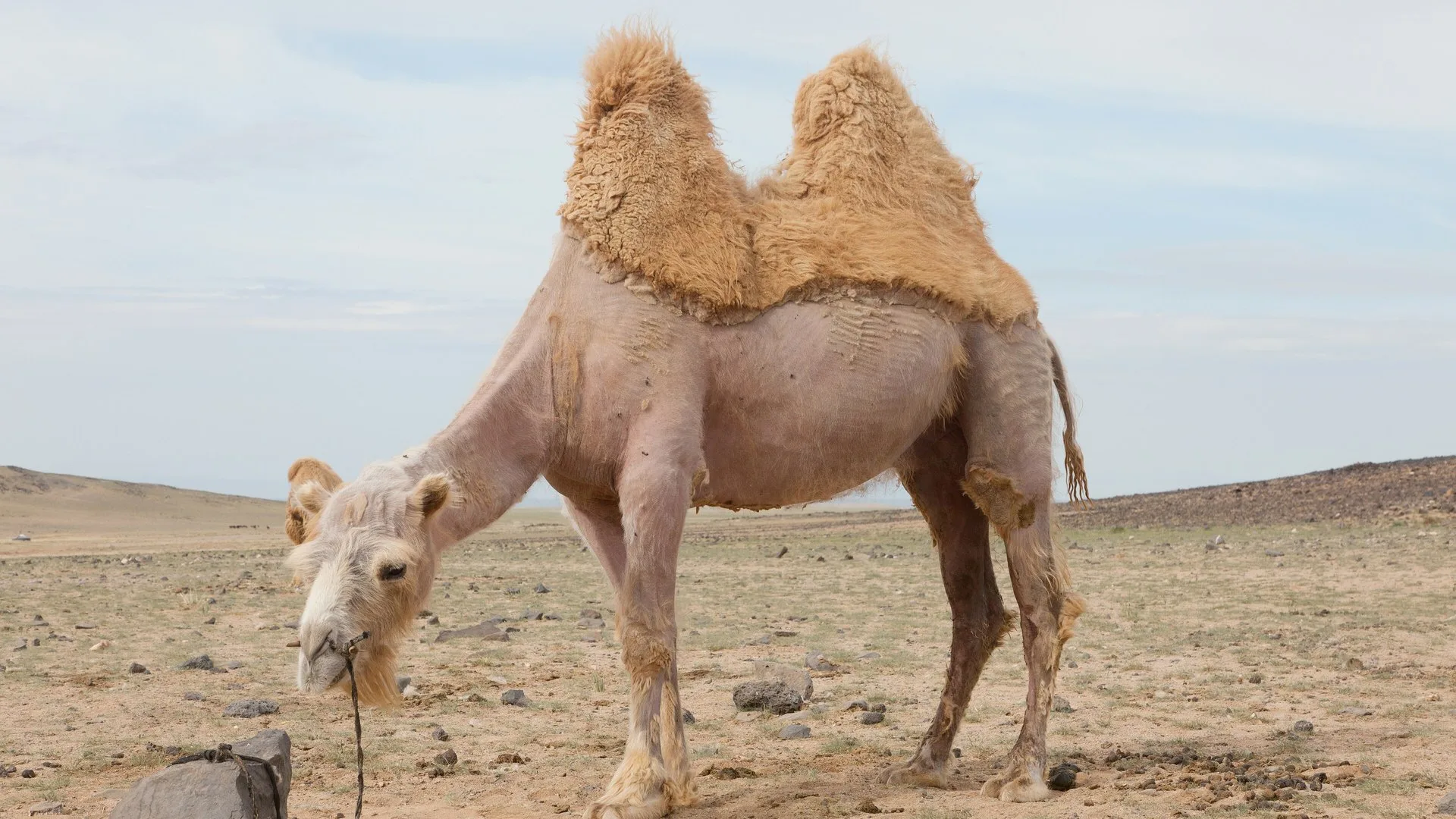
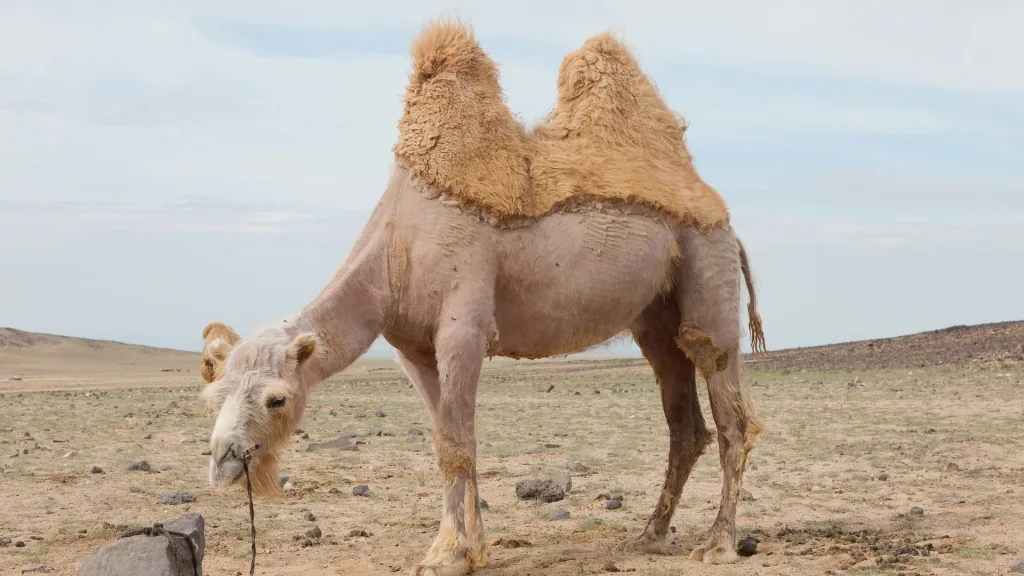
There are two domestic camel species, and the quickest way to tell them apart is still the one you learned as a kid: count the humps. One hump is a dromedary, Camelus dromedarius. Two humps is a Bactrian, Camelus bactrianus. A handy memory aid: a capital D tipped on its side has one bump, a capital B has two.
The differences do not stop there.
Where they live
Dromedaries are the camels of hot deserts: the Arabian Peninsula, North Africa, the Horn of Africa and parts of South Asia. They are by far the more common of the two and make up the large majority of the world’s camels. People have carried them all over the world. The U.S. Army imported dromedaries in the 1850s for a short-lived Camel Corps in Texas and the Southwest, and Australia now has one of the largest feral dromedary populations anywhere, descended from pack animals brought in during the nineteenth century.
Bactrians belong to the cold deserts and steppes of Central and East Asia, especially Mongolia and northern China, including the Gobi. Summers there can top 100 degrees Fahrenheit and winters drop far below freezing, sometimes with snow on the ground for months.
How they are built for it
That climate shows up in the coat. Bactrians grow a thick, shaggy winter coat and shed it in big ragged sheets in spring, which is why a Bactrian in May can look like it is coming apart. Dromedaries keep a short, fairly even coat all year. Bactrians are generally stockier, with shorter legs, while dromedaries are taller and rangier, built to move across hot sand.
Handlers often describe Bactrians as calmer than dromedaries, though temperament varies a lot between individual animals and depends heavily on how a camel was raised.
A wild cousin
There is a third, often forgotten species: the wild Bactrian camel, Camelus ferus. Genetic studies show it is a separate species, not just domestic camels gone feral. Only around a thousand survive, in remote parts of the Gobi in Mongolia and China, and the species is listed as critically endangered.
What happens when you cross them
Dromedaries and Bactrians can interbreed, and people in Central Asia and Turkey have done it on purpose for centuries to get a big, strong working animal. The answer to the obvious question is no, you do not get three humps. A first-generation hybrid usually has one long, lumpy hump, sometimes with a dip in the middle that hints at two. Hybrids are prized in Turkey’s camel-wrestling tradition and in Kazakhstan.
Which is worth more
Outside their home ranges Bactrians are much less common than dromedaries, and in places like the United States that scarcity tends to push their price up. In the Gulf states the picture flips: a top racing dromedary, or a winner at one of the region’s camel beauty contests, can sell for staggering sums.
For what is actually in those humps, see why the hump is not a water tank and the camel myths we keep hearing.
Sources: Bactrian camel and Wild Bactrian camel, Wikipedia; United States Camel Corps, Wikipedia.