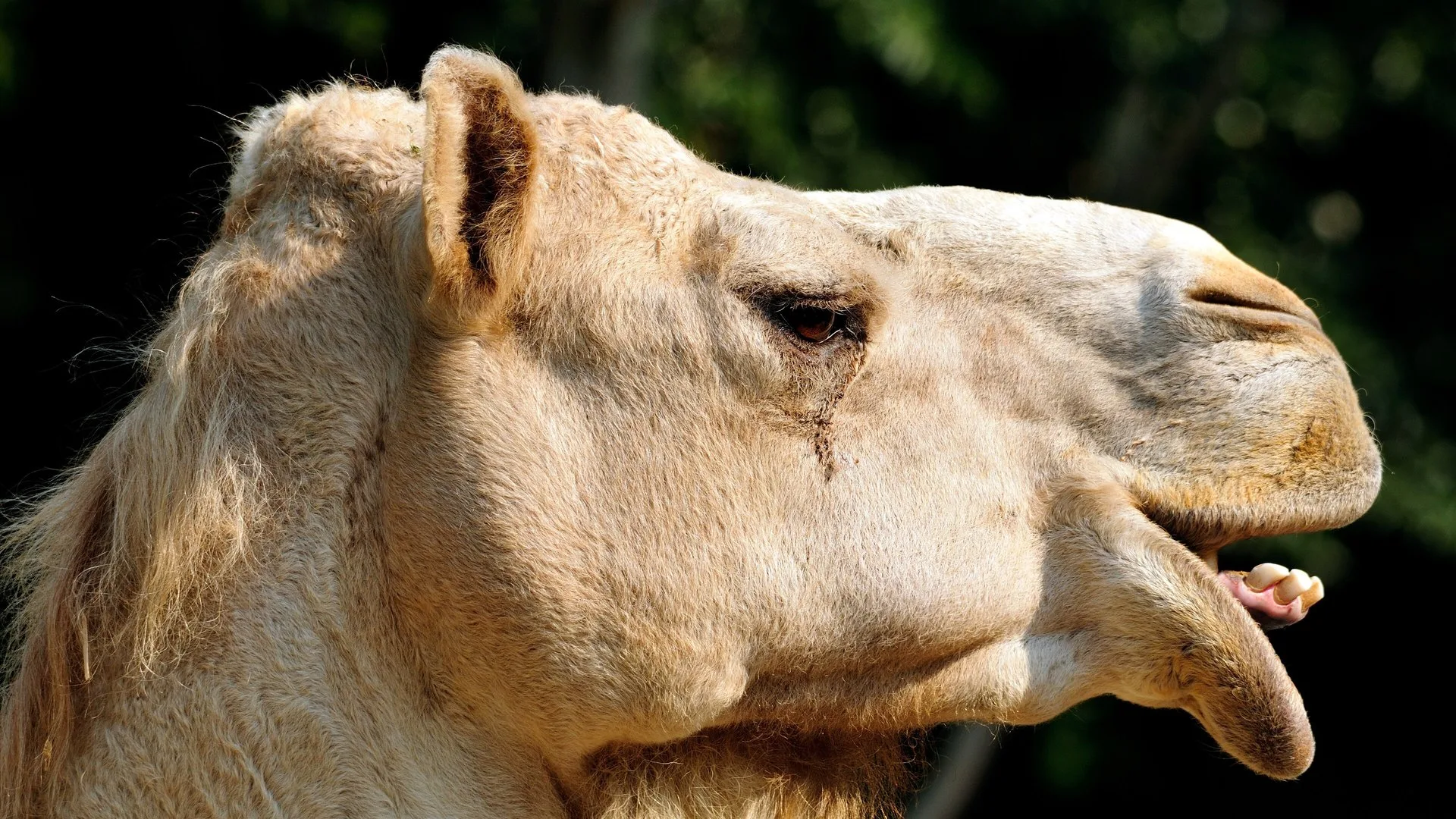
The internet has a small genre of camels drinking things they should not: soda from a bottle, a can held up by a laughing tourist, the occasional bucket of something fizzy. The animals usually finish in a few seconds, and the clips get passed around for the speed alone. Usually the camel was hand-raised on a bottle as a calf, so the trick is less surprising than it looks.
Soda is a bad idea for a camel for the same reasons it is a bad idea for a horse: the sugar and acid are hard on the gut and the teeth, and nothing about a camel’s diet prepares it for a hit of syrup. But the clips point at something real. Camels are astonishing drinkers.
The numbers
A dehydrated camel arriving at water can drink more than 100 liters, roughly 25 to 30 gallons, in around ten to fifteen minutes. Researchers who watched camels in North Africa in the 1950s recorded single drinking sessions in that range. For most mammals, drinking that much that fast would be dangerous. The sudden flood of water dilutes the blood, and red blood cells swell and burst.
Camels get around that with oval red blood cells that can take on a lot of water without rupturing, and with a gut that releases water into the bloodstream gradually instead of all at once. Within a short time the animal has refilled what it lost on the trail, and it is ready to go again.
Why they can wait so long
The other half of the story is how slowly camels lose water to begin with: a body temperature allowed to rise during the day instead of sweating, a nose that pulls moisture back out of exhaled breath, concentrated urine and very dry dung. Together those let a working camel go days, and in cool weather on green grazing even weeks, without a drink. We go through the physiology in why camels don’t store water in their humps.
So when a camel empties a bottle in five seconds, it is not showing off. It is doing on a small scale what its body is built to do on a large one.
Sources: Knut Schmidt-Nielsen, “The Physiology of the Camel,” Scientific American (1959); Dromedary, Wikipedia; Camel, Encyclopaedia Britannica.