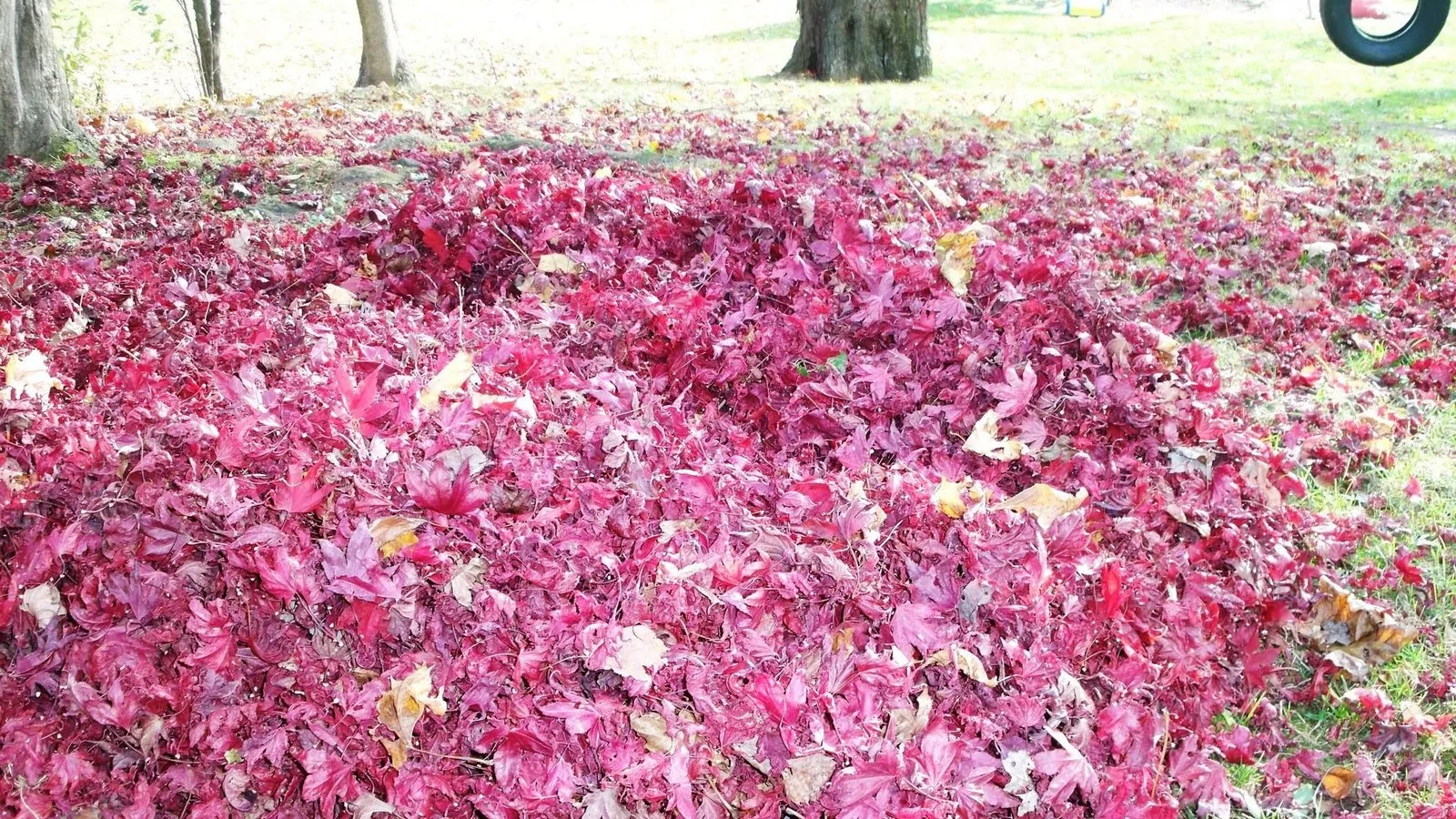
The red and yellow in a November woods are not a new coat of paint. They are what was already in the leaf, once the green gives way.
The National Park Service explains that chlorophyll, the most common pigment in a leaf, absorbs sunlight to make food for the tree and is also what makes the leaf look green. When the temperature drops and the days get shorter, the tree starts conserving energy for winter, including by dropping its leaves. As autumn goes on, the tree sends an enzyme that breaks down the chlorophyll. “Once the chlorophyll breaks down, the other pigments that weren’t visible to the human eye before are now on full display,” the Park Service writes. Each tree has a different mix of those remaining pigments, which is why two trees on the same slope can turn different colors. One of those pigments, carotene, is what makes some leaves orange — “the same pigment that makes a carrot orange,” the article says.
Weather changes how bright the show looks. “When there is more rain, the colors pop even more,” the Park Service says, and a cool fall can make red maple leaves look brighter. After the chlorophyll is gone, the tree takes the last nutrients out of the leaves and pulls them back into the branches and trunk before the leaves fall.
That is a more precise story than “the cold turns them red,” and it is also why a dry or a warm stretch can mute a famous overlook. The chemistry was running all summer. November is just when we are finally allowed to see it.