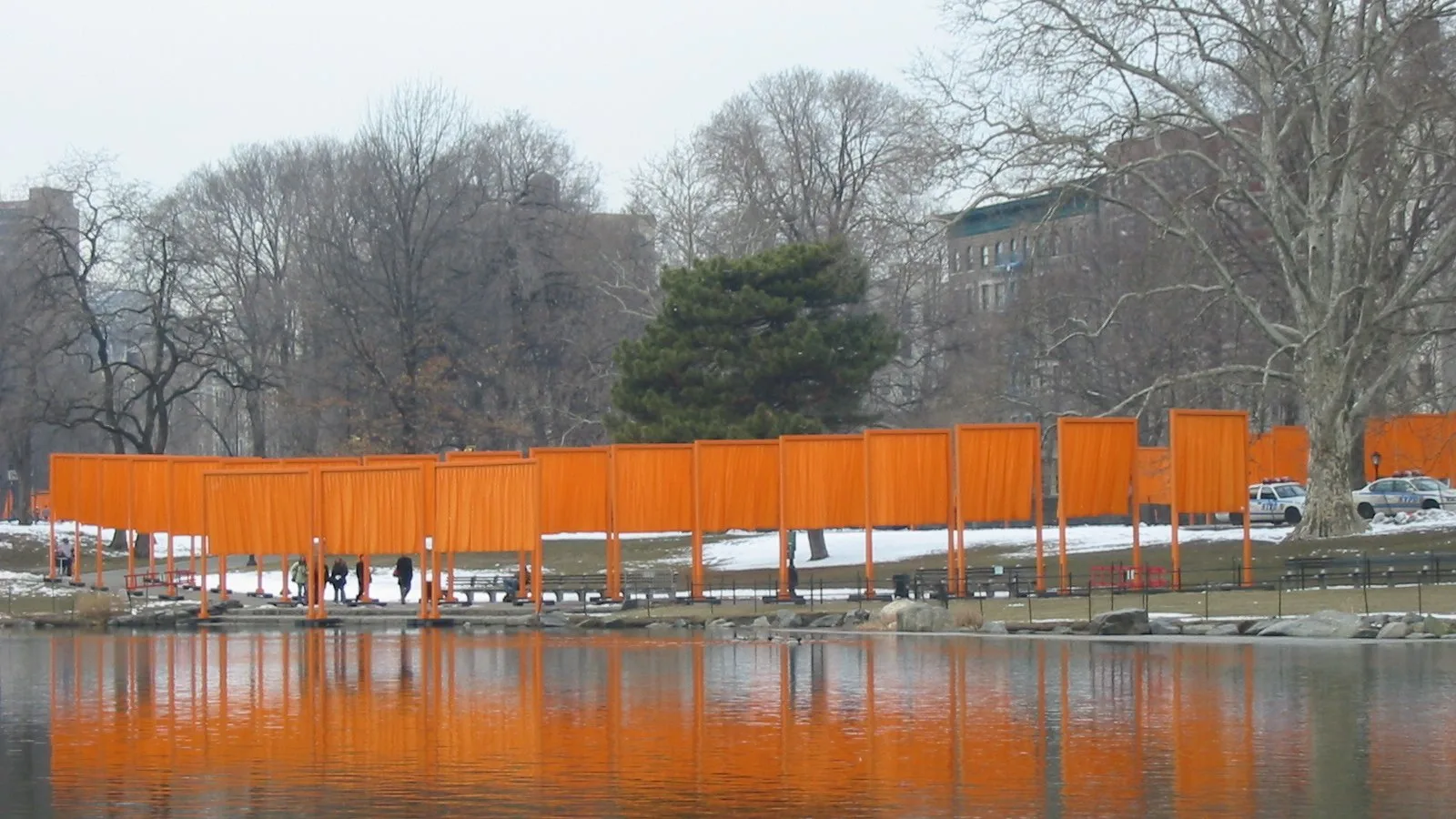
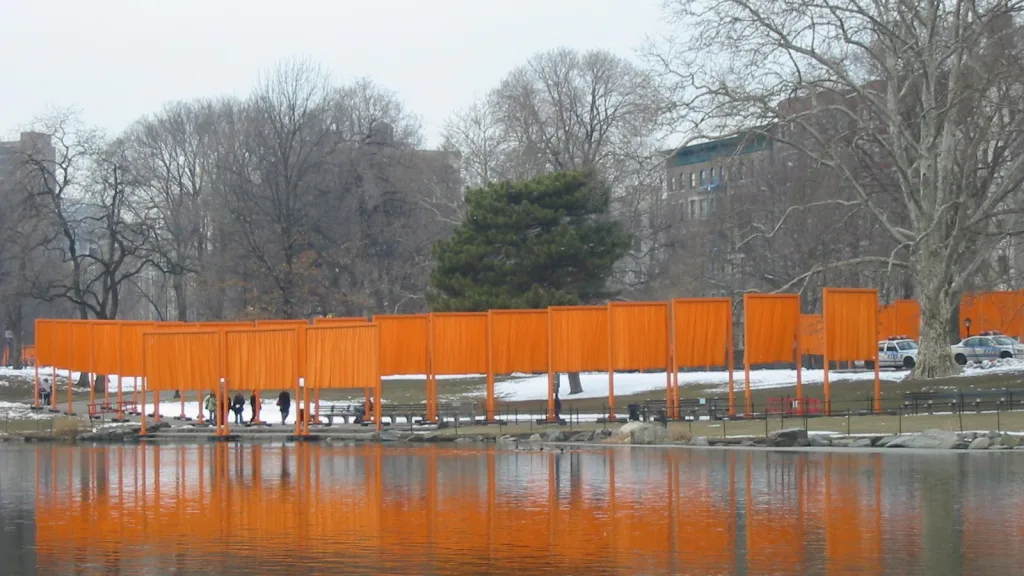
February is not usually a busy month in Central Park. In 2005 it was. From February 12 to 27, the artists Christo and Jeanne-Claude filled the park with The Gates: 7,503 tall frames, each hung with a panel of saffron-colored fabric, lining 23 miles of footpaths. Hundreds of thousands of people came out in the cold to walk under them.
Twenty-six years in the making
The couple first proposed the project in 1979. New York’s parks department turned it down in 1981. They waited, and in 2003 Mayor Michael Bloomberg’s administration finally agreed. The artists paid for the entire project themselves, a cost reported at around $21 million, raised as they always did by selling Christo’s preparatory drawings and collages. They took no sponsorships, and the public paid nothing to see it.
Temporary on purpose
Like all of Christo and Jeanne-Claude’s large projects, from wrapping the Reichstag in Berlin to the Running Fence across California hills, The Gates was designed to disappear. After sixteen days it was taken down and the materials were recycled. The artists argued that impermanence was part of the point: people pay closer attention to something they know they will lose.
What it did
Critics argued about whether it was great art. Many New Yorkers simply enjoyed it: a burst of warm color against the bare trees and gray snow, and a reason to walk through the park together in the middle of winter. The fabric moved with the wind, so the whole installation changed with the weather and the light.
Jeanne-Claude died in 2009 and Christo in 2020. Their final project, wrapping the Arc de Triomphe in Paris, was completed posthumously in 2021. For many New Yorkers, though, their most memorable work is still the one that turned an ordinary February into a festival.
Sources: The Gates, Christo and Jeanne-Claude; The Gates, Wikipedia; Christo and Jeanne-Claude: The Gates, The Metropolitan Museum of Art.