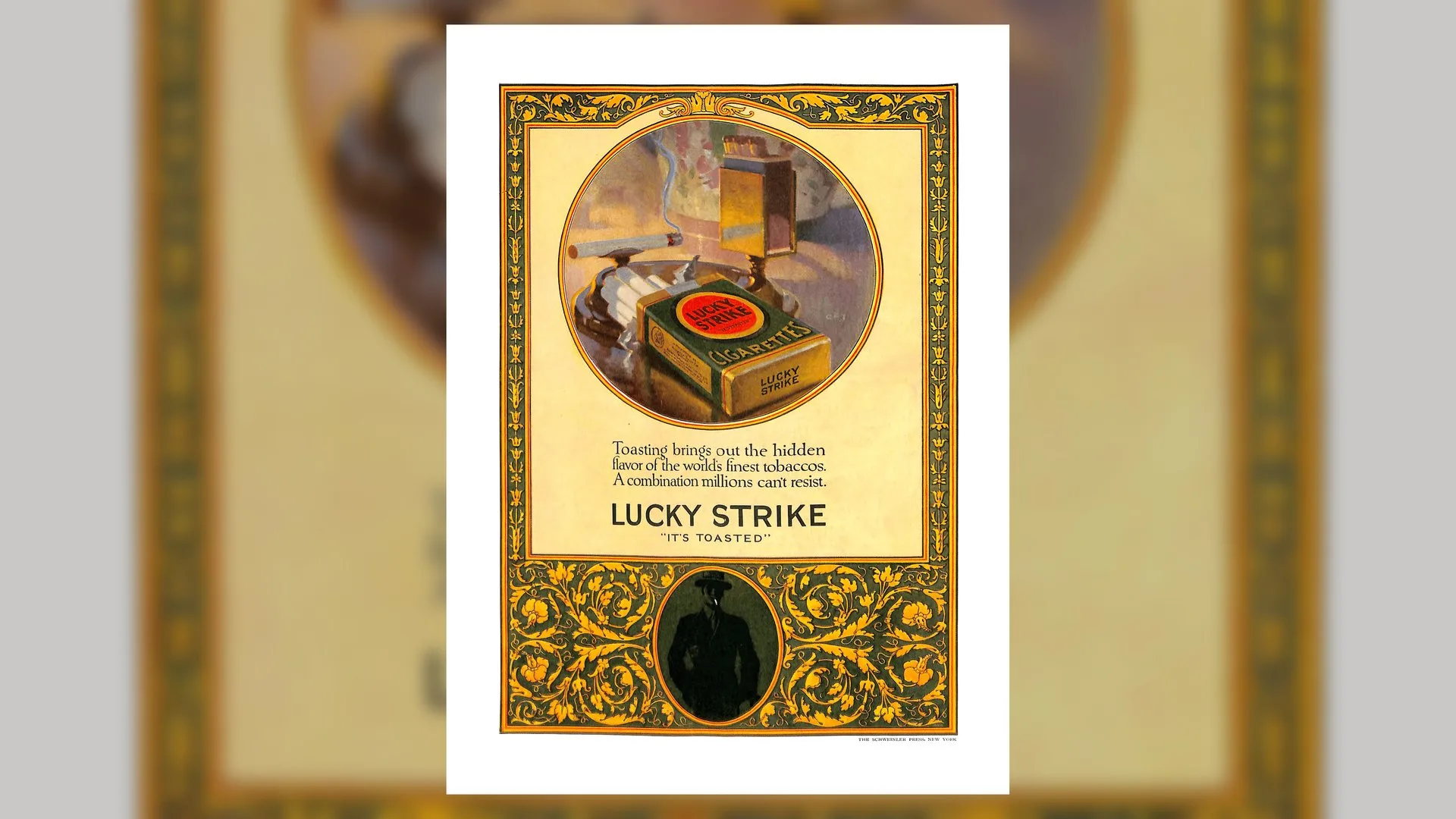
Among the earliest television commercials that people still pass around online is a Lucky Strike ad from the late 1940s. Cigarettes, animated in stop motion, square dance across a table to a cheerful fiddle tune and caller. It is charming, simple and, by today’s standards, startling.
Selling to everyone
The ad is a reminder of how ordinary cigarette marketing once was. Lucky Strike, made by the American Tobacco Company, was among the best-selling brands in the country. Its slogans, such as “LS/MFT” (“Lucky Strike Means Fine Tobacco”), were everywhere, and tobacco companies sponsored radio and TV shows. Cartoon-style ads and catchy tunes appealed to the whole family, including people too young to buy.
The turn
The 1964 report on smoking and health from the U.S. Surgeon General, linking smoking to lung cancer, changed the public conversation. Warning labels followed in 1966. Then Congress passed the Public Health Cigarette Smoking Act, and on January 2, 1971, cigarette ads disappeared from American television and radio. The last TV cigarette ads aired the night before, during college football bowl games on New Year’s Day.
The cartoon problem never went away
Tobacco marketing moved to magazines, billboards and sponsorships. In the late 1980s R.J. Reynolds introduced Joe Camel, a cartoon mascot that critics said appealed to children. Under pressure, including a Federal Trade Commission complaint, the company dropped him in 1997. The 1998 Master Settlement Agreement between tobacco companies and the states then banned cartoon characters in cigarette ads.
Looking back, the dancing cigarettes are a striking piece of animation history. They are also a clear record of how much a society can change its mind.
Sources: Lucky Strike, Wikipedia; Public Health Cigarette Smoking Act, Wikipedia; History of the Surgeon General’s Reports on Smoking and Health, CDC; Joe Camel, Wikipedia.