Before the 1950s, loading a ship was slow, expensive and labor-intensive. Dockworkers carried cargo aboard piece by piece: sacks, barrels, crates and loose goods, packed by hand into the hold. A ship could spend as long in port loading and unloading as it did at sea, and a lot of cargo was damaged or stolen along the way.
McLean’s idea
Malcom McLean, a North Carolina trucking entrepreneur, thought there was a better way: put the cargo in standard boxes that could be lifted straight from a truck onto a ship and off again, without anyone touching what was inside. On April 26, 1956, a converted World War II tanker called the Ideal X left Port Newark, New Jersey, for Houston carrying 58 metal containers. McLean’s company later became Sea-Land.
The savings
The economics were dramatic. According to economist Marc Levinson, whose book The Box tells the story, loading loose cargo cost several dollars a ton in 1956, while the containers on the Ideal X cost a few cents a ton. Ships could turn around in hours instead of days. Containers were sealed, cutting theft. Over the following decades, international standards for container sizes, adopted in the 1960s, meant that a box could travel by truck, train and ship around the world.
The consequences
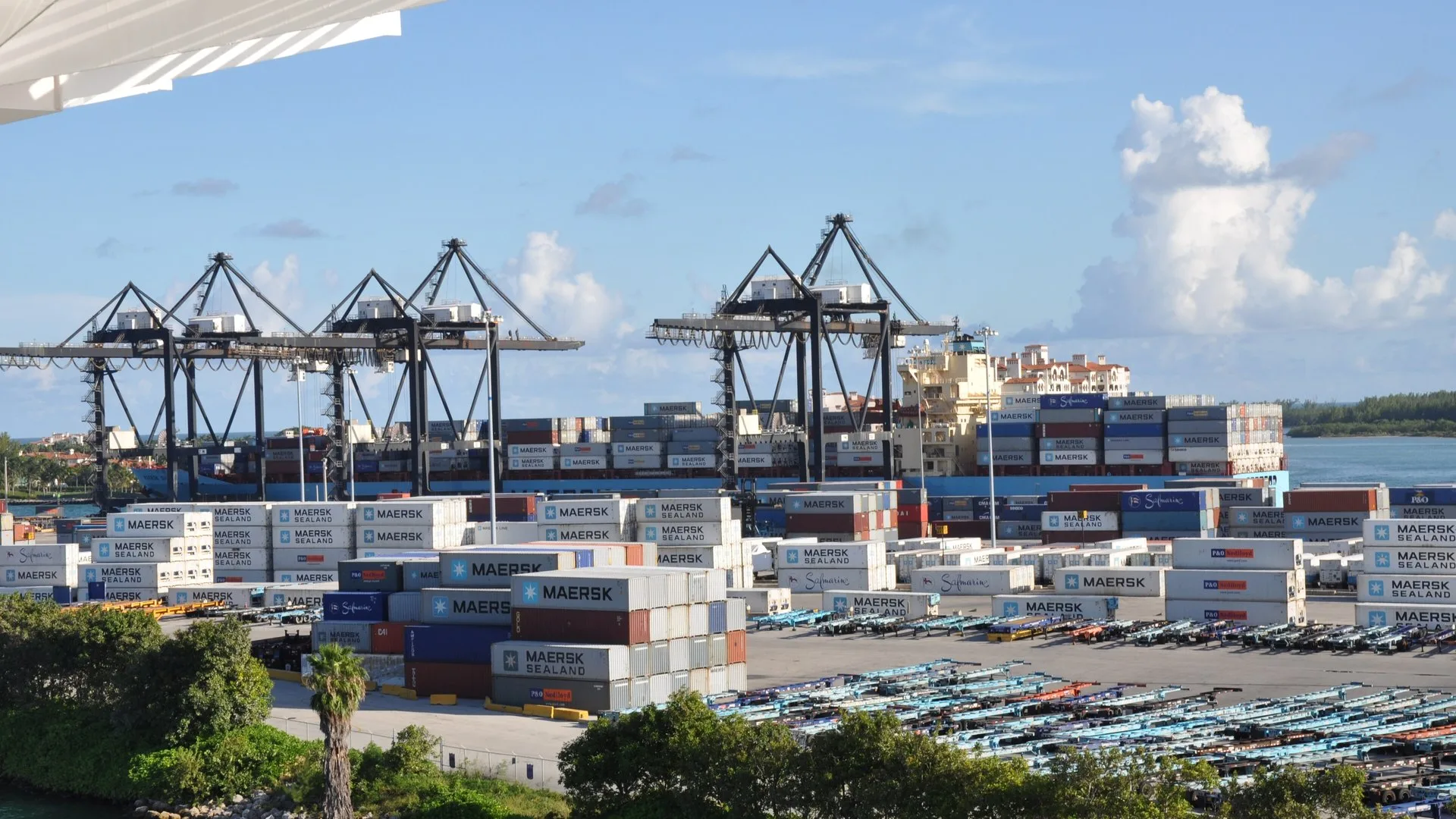
Cheap, reliable shipping made modern global supply chains possible. It became practical to make parts in one country, assemble them in another and sell them in a third. It also transformed port cities. Old waterfront docks in places like Manhattan and London emptied out as shipping moved to huge new container terminals, and the number of dockworker jobs fell sharply.
Today, the largest container ships carry more than 20,000 standard 20-foot boxes. When the Ever Given blocked the Suez Canal for six days in 2021, the world got a reminder of how much depends on those boxes moving on time.
Sources: Marc Levinson, The Box, Princeton University Press; Malcom McLean, Wikipedia; SS Ideal X, Wikipedia.